
Georgia
A country used as a position
What Georgia offers international business, read without the tourism brochure: access, agreements, institutions and the corridors that pass through it.
01 · At a crossroads
Where four regions are all within reach
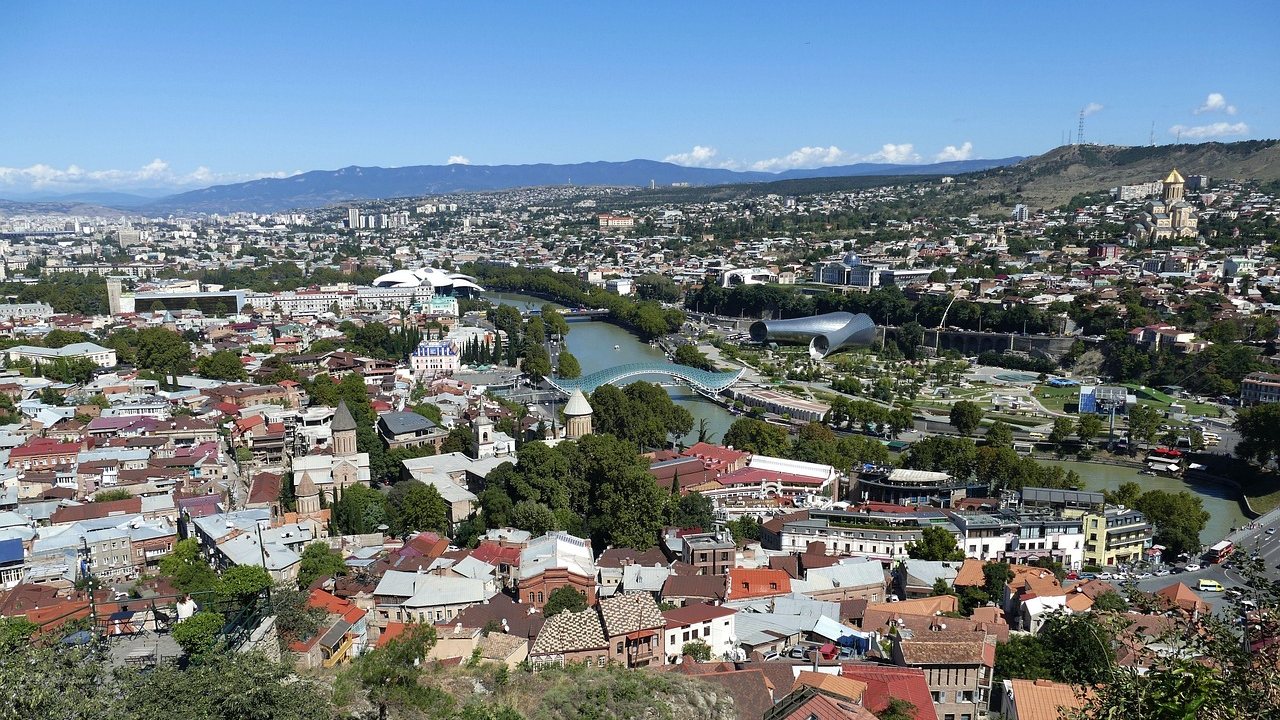
Georgia sits in the South Caucasus, on the eastern shore of the Black Sea, between Turkey, Russia, Armenia and Azerbaijan, with the Caspian beyond. Europe is to the west, the Gulf to the south, Central Asia and China to the east, and North Africa within the same commercial reach as southern Europe.
That geography has been an argument for two thousand years. What is new is that Georgia has built the legal and commercial architecture to use it: trade agreements in both directions, a convertible currency, an open foreign ownership regime and a registry that works.
02 · Platform
A platform for international business
Georgia is small as a domestic market. Around three and a half million people, concentrated in Tbilisi. Treated as an end market on its own, it disappoints.
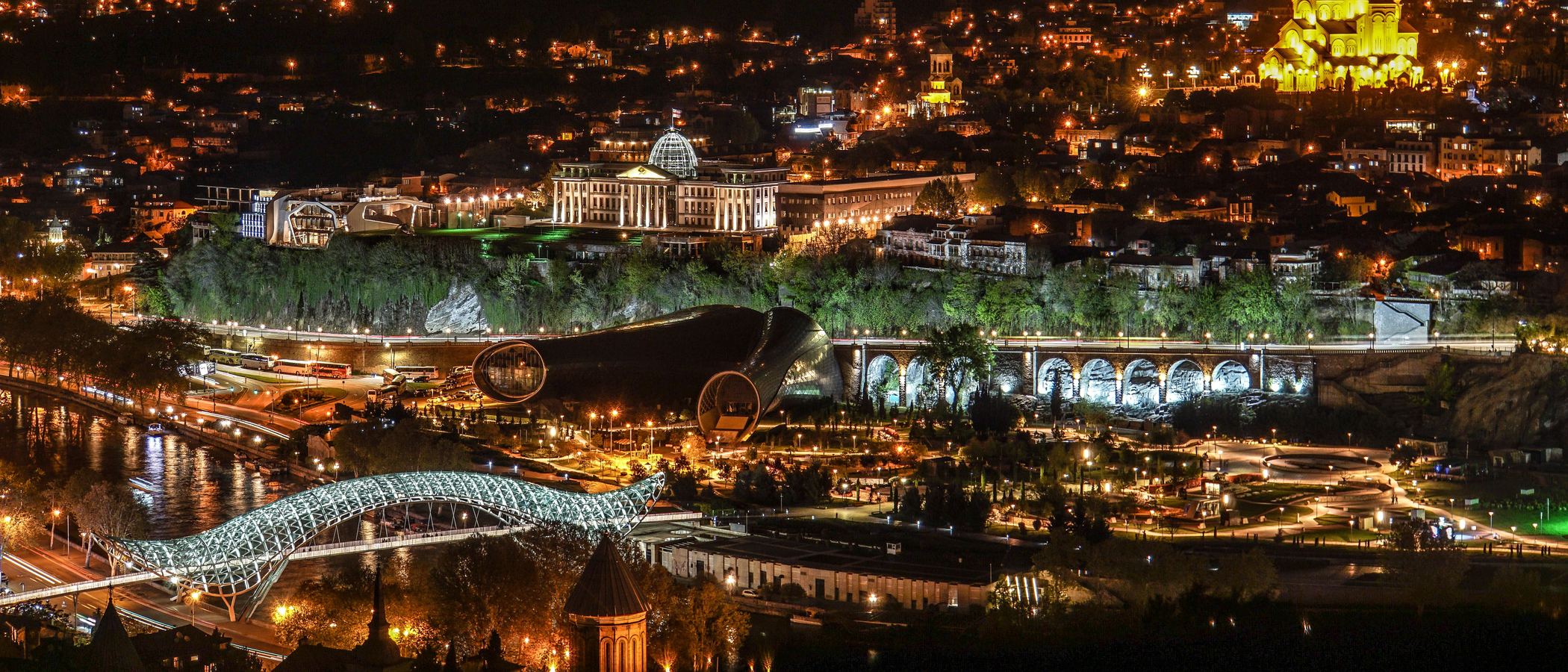
Treated as a platform, it does something different. A Georgian company can contract into the European Union under a free trade agreement, into China under another, and into Turkey and the CIS under others again. Foreign ownership is unrestricted in most sectors. Capital moves without exchange control. That is a base, and bases are what serious cross-border structures are built on.
03 · Access
Access to regional markets
The value of the position is the set of agreements attached to it, not the size of the country holding it.
European Union
A Deep and Comprehensive Free Trade Area in force since 2016, alongside the Association Agreement. Regulatory convergence is a stated policy direction.
China
A free trade agreement in force since 2018, which few economies in the region hold.
Turkey and EFTA
Free trade with Turkey, a large neighbouring industrial economy, and with the EFTA states.
CIS states
Established free trade arrangements across most of the Commonwealth of Independent States.
The Gulf
Short flight times, growing air links and an increasing volume of Gulf capital looking north for deployment.
Movement of people
Citizens of more than ninety countries enter without a visa, many for up to a year. Teams can be assembled quickly.
04 · Investment environment
What an investor is actually buying
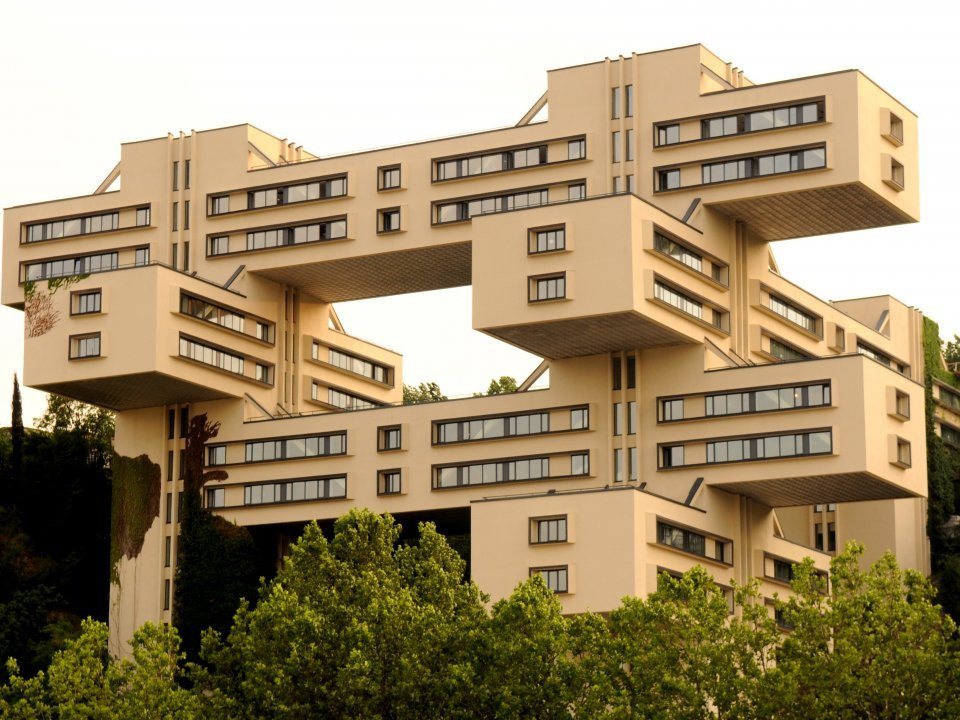
Georgia is an emerging market and should be assessed as one. The banking sector is concentrated, modern and highly digitalised, with two institutions listed in London. Property is freely transferable to foreigners. The currency floats.
Returns in real estate have historically been strong, and so has volatility. Regional politics is a real factor and we treat it as one. An investor here is buying growth and access, and accepting the risk profile that comes with both. We put that in writing before a mandate begins, not after.
05 · Business environment
Administration that answers
Business setup in Georgia is measured in days rather than months. Company formation runs through a public registry that is digital and searchable. Bank accounts for a resident company are opened quickly by regional standards. Tax returns are filed online.
The tax regime is simple and competitive, and we treat that as a supporting fact rather than the headline. Structures built only for a tax rate tend not to survive their first review by a European bank or auditor. Structures built around a real activity, which happen to sit in a competitive regime, do.
06 · Infrastructure
Infrastructure and connectivity
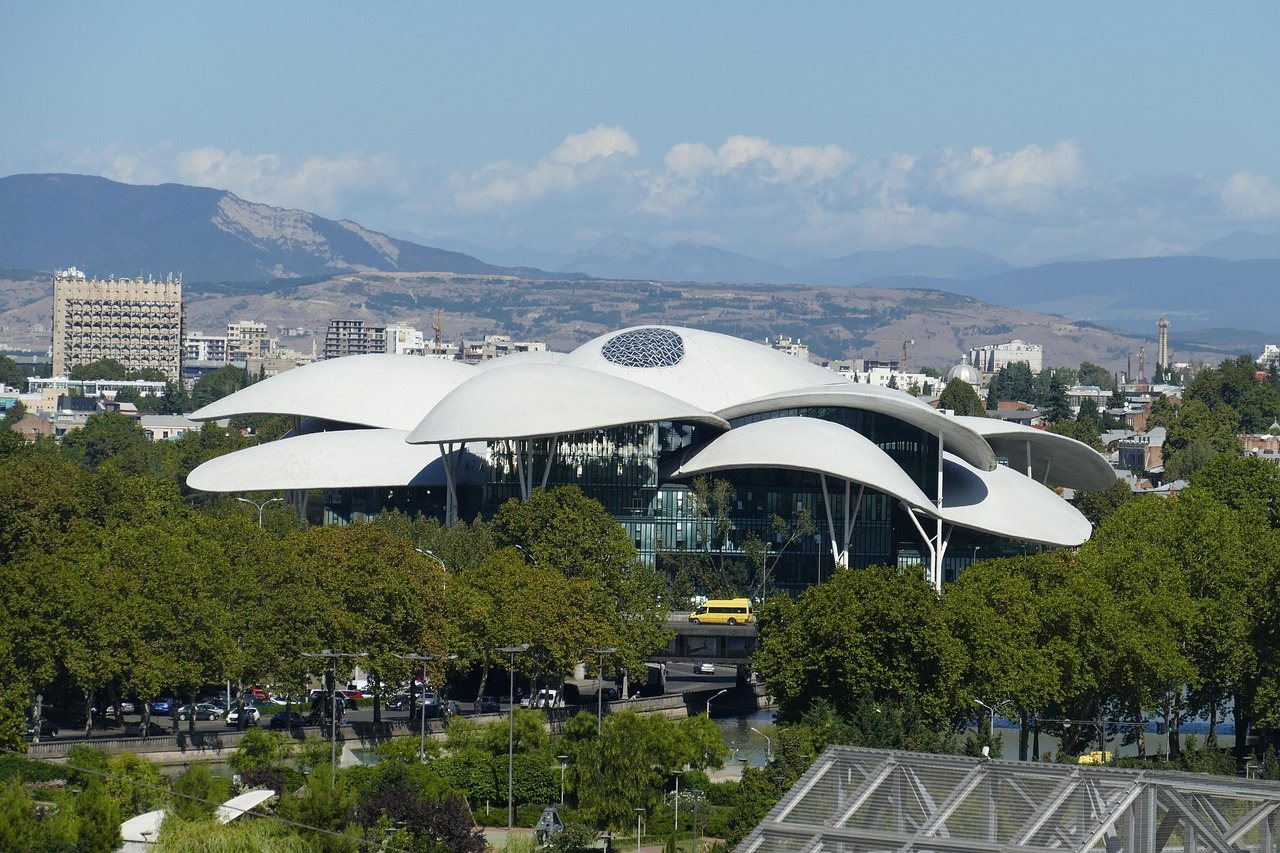
Georgia is the land route between the Caspian and the Black Sea, and therefore between Central Asia and Europe. Rail, road and pipeline corridors run east to west across the country, and Black Sea ports connect them onward to the European Union.
Volumes on this route have risen as operators have looked for alternatives to the northern corridor. Port capacity on the Georgian coast is the constraint and the opportunity at the same time, and its development is worth watching closely for anyone whose business is physical goods.
07 · Corridors
What runs through Tbilisi
Access is only useful if someone is using it. These are the corridors our clients are actually running, and where we hold relationships.
- France and Georgia, the firm's founding corridor
- Europe and Georgia, for market entry and for Georgian companies raising or selling into the EU
- The Middle East and Georgia, principally capital moving north
- Asia and Georgia, trade agreements and the east to west transit route
- Africa and Georgia, sourcing and commercial exchange
08 · Why clients establish here
The reasons that hold up after year one
To hold a position between regions
A base that can contract into the EU, China, Turkey and the CIS from one jurisdiction.
To move quickly
Formation in days, banking in days, and institutions that can be reached directly when something needs resolving.
To own without restriction
Foreign ownership of companies and property is open in most sectors, with no exchange control on capital.
To diversify jurisdiction risk
A second base outside the client's home legal and banking system, held for structural reasons rather than defensive ones.
To be near the deal flow
Regional opportunities are still sourced through relationships rather than through platforms.
To go out from Georgia
Georgian companies use the same position in reverse, to reach European and Gulf markets.
09 · How we assist
What we actually do here
We assess whether the position is right for the objective, design the structure, and run the file through registration, banking and the first commercial relationships. Where regulated work is required, we coordinate with qualified professionals admitted in the jurisdiction concerned.
Afterwards we stay. Renewals, reporting, counterparties and the standing relationship with local professionals are held by the same team, under a private office mandate.
Contact